
The real estate industry is one of the most competitive markets in the US. With 360,000+ brokerages and countless individual agents vying for attention, standing out online isn’t optional—it’s essential. To make things even tougher, property portals like Zillow, Realtor.com, and Trulia dominate broad search results, leaving local agents to fight for visibility in their own neighborhoods.
But here’s the opportunity: 95% of homebuyers begin their journey online. That means the agents who master search engine optimization (SEO) have a massive advantage in capturing high-intent leads before competitors even get a chance.
What Is Real Estate SEO?
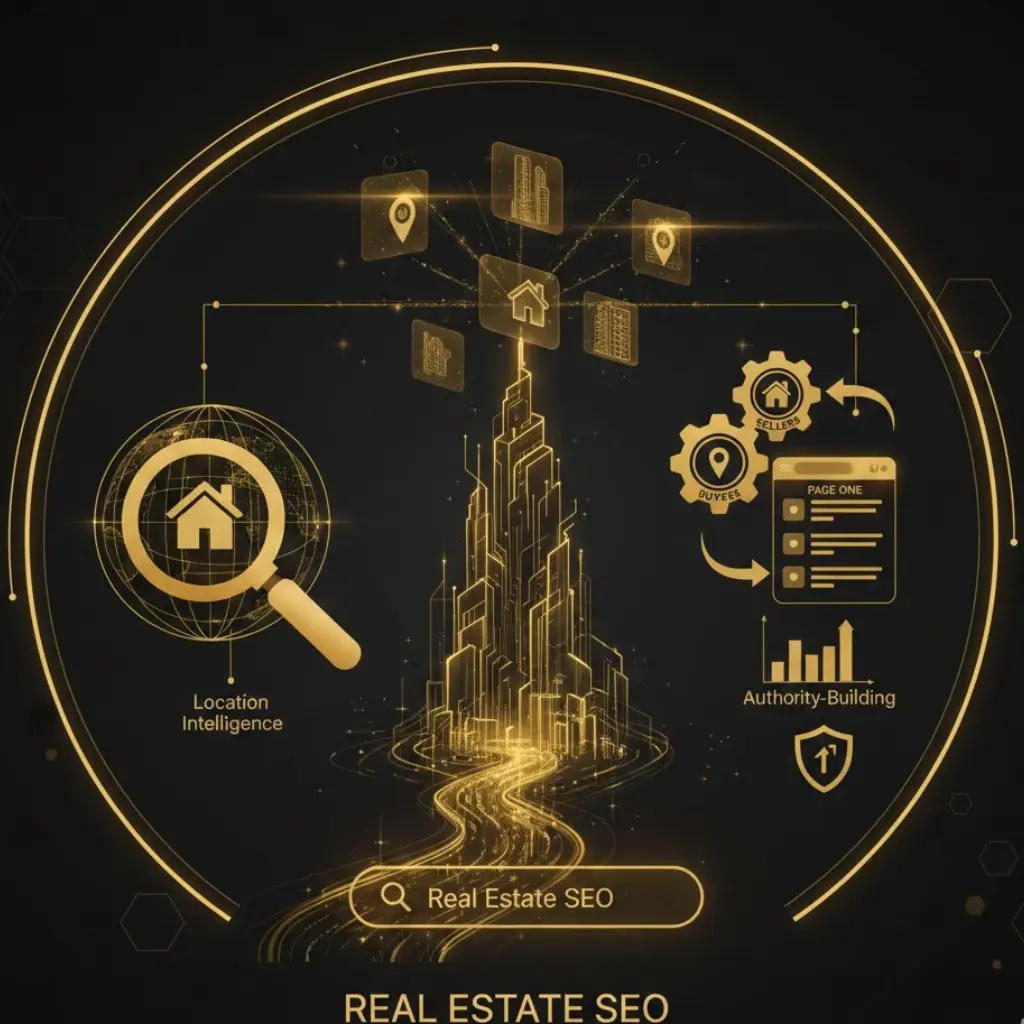
Real SEO is the process of optimizing your website and online presence so you rank for property-related and location-specific searches.
In practice, this means showing up when buyers and sellers search for terms like:
- “homes for sale in [city/ZIP code]”
- “real estate agent near me”
- “best realtor in [neighborhood]”
Unlike national SEO campaigns, estate SEO is hyper-local. Success depends on targeting city, ZIP code, and neighborhood keywords—where competition is fierce but the search intent is high.
These are high-value, action-driven queries. People searching for “3-bedroom homes in Downtown Miami” or “sell my condo in Seattle” are often ready to make decisions quickly. Ranking for these searches puts you in front of qualified leads, not just passive browsers.
It’s also important to remember that real estate falls under Google’s YMYL (Your Money/Your Life) category. Because buying and selling homes involves major financial decisions, Google expects exceptionally trustworthy, accurate, and expert content. Demonstrating E-E-A-T (Experience, Expertise, Authoritativeness, Trustworthiness) is non-negotiable if you want to rank.
Why Real Estate SEO Is Essential
1. Almost Every Buyer Starts Online
With nearly all buyers beginning their property journey online, visibility is survival. If you’re not ranking, your competitors are taking those leads.
2. Competition Is Intense
There are 2.5 agents for every home on the market in many US cities. Standing out requires more than just listings—it requires a sophisticated local SEO strategy.
3. Capture Hyper-Local Traffic
Big portals dominate national queries, but they can’t compete at scale for neighborhood-level searches. That’s where local agents win—by targeting long-tail searches like “condos for sale near [landmark]”.
4. Build Trust and Authority
High Google rankings act as social proof. Buyers trust organic search results more than paid ads. Pair that with strong reviews in the Google Map Pack, and you instantly position yourself as the leading local expert.
5. Long-Term ROI
Unlike ads, which stop producing results the second you stop paying, SEO is a long-term investment. A single optimized page can generate leads for years—making SEO one of the most cost-effective growth strategies for real estate.
Link Building for Real SEO
Backlinks are the foundation of authority in Google’s eyes. For real estate, the most valuable links come from:
- Local news outlets reporting on housing trends or market updates
- Home improvement or interior design blogs
- Industry publications like Realtor Magazine or regional real estate associations
- Local business websites with community authority
High-quality backlinks not only improve your Domain Rating but also help you rank for competitive local search terms.
While organic content (like neighborhood guides or home-buying tips) can naturally earn links, active outreach accelerates results. For example:
- Guest posting on local lifestyle or finance blogs
- Niche edits on existing relevant articles
- Infographic outreach sharing local housing market data
Real Estate SEO Strategies
1. Keyword Research & Content Strategy
Start with hyper-local, long-tail keywords. Instead of chasing broad terms like “real estate,” focus on intent-driven queries such as:
- “Townhomes for sale in [neighborhood]”
- “Best real estate agent in [city]”
- “Commercial property listings in [ZIP code]”
Use tools like Google Autocomplete, SEMrush, or Ahrefs to uncover what your market is searching for.
Then, align your content strategy:
- Property listings → Write unique, detailed descriptions. Highlight schools, amenities, and neighborhood benefits instead of generic text.
- Neighborhood guides → Share insights only a local expert could provide.
- Market updates & blogs → Regularly publish trends, pricing insights, and tips for buyers/sellers to establish authority.
2. Local SEO & Citations
For real estate, local SEO is everything. That means dominating the Google Map Pack and ensuring your business appears in all relevant local searches.
- Google Business Profile (GBP): Claim and optimize your profile with accurate NAP (Name, Address, Phone), business categories, photos, and regular updates.
- Citations: Build consistent listings across Yelp, Yellow Pages, Zillow, Realtor.com, and local directories. Even without backlinks, citations confirm business legitimacy.
- Reviews: Encourage satisfied clients to leave reviews on Google and Zillow. Top-ranking agents often have hundreds of reviews, which massively influence rankings and consumer trust.
- Digital PR & Outreach
Digital PR helps real estate agents earn media coverage and authoritative backlinks. Potential opportunities include:
- Press releases about new office openings, record-breaking sales, or market insights
- Local sponsorships (schools, sports teams, community events)
- Expert commentary in news articles about housing trends
- Collaborations with mortgage brokers, interior designers, or moving companies
Should You Outsource Real Estate?
SEO in real estate is complex, time-intensive, and highly competitive. From technical audits to outreach campaigns, doing it all in-house can drain resources.
Many successful brokerages and agencies choose to outsource parts of their SEO, such as:
- Keyword research & content creation
- Link building & blogger outreach
- Citation building & directory management
- Press release writing & distribution
Final Thoughts
In today’s market, real estate SEO isn’t optional—it’s mission-critical. Buyers and sellers are searching online, competitors are everywhere, and trust is harder to earn than ever.
By combining hyper-local keyword targeting, expert content, citation building, link acquisition, and digital PR, you can dominate your local search results and put your agency ahead of the pack.